Engagingly written — all the guides from this stable are first class
— Traveller
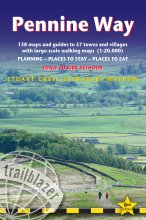
Pennine Way: Edale to Kirk Yetholm
Excerpt:
Practical information for the walker
Contents list | Introduction | About the Pennine Way | Practical information for the walker | Itineraries | Using this guide | Sample route guide: Calder Valley to Ickornshaw | GPS waypoints
ACCOMMODATION
There is no shortage of accommodation along the Pennine Way and the options increase if you’re prepared to walk a mile or two off the path, although this is rarely an absolute necessity. Many of the towns and villages on the Way are situated in popular walking areas and have an abundance of walker-friendly establishments, including hotels, B&Bs, hostels, bunkhouses and campsites. This means that you often don’t need to book weeks in advance of your walk.
If you plan on walking in the high season (between mid July and early September), however, you are well advised to book at least a few days in advance, especially if your stay coincides with a weekend as accommodation, even in a town with many options, can fill up quickly upon the announcement of a weekend of decent weather (see box p21).
Camping
If you’re doing the Pennine Way on a budget you may be considering using campsites for your evening stops. Be aware that facilities at campsites vary wildly between locations and you may just as easily find yourself directed towards a field already occupied by sheep, as pitching on the manicured lawn of a modern, fully equipped ‘glamping’ site. You may also be letting yourself in for the worst of both worlds – you lack the freedom and exhilaration of sleeping out in the wilds (see below) and the negligible soundproofing of close-packed tents means a rowdy group can ruin your evening.
As long as you avoid packed campsites, the flexibility offered by this approach can pay dividends; there’s no need to book accommodation, you can change plans on a whim, or depending on the weather, and you can treat yourself to a more comfortable option whenever it’s available.
The only real advantages to campsites over wild camping are the perceived sense of security, the hot shower and toilets and the probable availability of a nearby pub for an evening meal. This last also means that you may be able to dispense with carrying anything other than emergency rations.
Wild camping (See also box p38) Of all the national trails in England, the Pennine Way probably offers the best chance to wild camp along the full length. Huge sections of the route are on high ground beyond the last farm wall or fence and there are plenty of inconspicuous places to pitch a small tent.
Wild camping offers the ultimate outdoor experience in this country, especially in the warm summer months; what could be better than sitting and watching the sun set behind the hills with your warm brew, or a wee dram, in hand? Perhaps, an early start to watch the sun rise? It also allows you to avoid the sometimes unnecessary diversion into town for accommodation, usually downhill with the inevitable uphill slog to return to the path in the morning.
Officially, in England and Wales, you need to seek the permission of the landowner before you can camp anywhere, but this is typically impractical and often impossible. An acceptable compromise, often shared by landowners, can be achieved by following these simple rules:
- Camp late or out of sight of nearby buildings and leave early
- Camp in small groups of no-more than two or three tents
- Never make open fires
- Bury or pack out your toilet waste (see p79)
- Leave no trace of your camp.
If you are spotted by a landowner, as long as you clearly look like a walker in transit they probably won’t shoot you but, if they ask you to move on, you must comply. Bedding down late and leaving early should avoid the chances of such a confrontation. Avoid camping beside a gate that is obviously well used and you will reduce your chance of inconveniencing a farmer coming and going from the hills.
In the Pennines there are some wild camping black spots: one is Kinder Scout, the first day out of Edale. Because of the high peat-fire risk during very dry and always busy summers it’s not unknown for rangers to set out in the evening to harry wild campers. Spare the hassle and save your wild nights until you’re over the Snake Pass, if not the A62. Ever busy Hadrian’s Wall is also a place you’d want to camp discreetly or just keep going; head for Wark Forest instead.
Camping barns, bunkhouses and hostels [see box opposite]
For walkers on a budget this type of accommodation is absolutely perfect; it is available in almost every town and village on the path and you are more likely to be able to just turn up at the door and get a bed, or ring the night before and book one, than if you were using B&B-style accommodation (see p22).
The quality of the accommodation will vary widely though, so don’t expect a room on your own or fluffy pillows and feather duvets; you will typically be sleeping in a dormitory/room with multiple bunk beds. In the height of the season these can be busy places and you need to be prepared for this; a busy bunkhouse kitchen can be a true test of patience and compromise and ear-plugs are an essential part of any hostelling kit list!
For many the appeal of this type of accommodation is the fact that you’re bunking with fellow walkers, often following the same trail, able to swap ‘war stories’ and take the time to sit down and talk, rather than a passing greeting on the trail. Friendships that can span a lifetime are created in this way.
At the lowest end of the scale is the camping barn (typically £5-10 per person). This may be no more than a roof over your head, a raised wooden sleeping platform, a kitchen area, where you use your own stove, and a toilet with a shower if you’re lucky. Assume that you’ll need your full camping kit list (apart from the tent) for this type of accommodation.
Bunkhouses provide more facilities and you can expect to pay around £10 per person per night. For this you will get a bunk bed, cooking facilities, hot showers and maybe even a drying room where you can hang wet gear. You will normally need a sleeping bag although some provide bedding for a small charge. Don’t expect breakfast or an evening meal, but some bunkhouses offer these.
There are two main types of hostel – privately run businesses and those that are part of the Youth Hostel Association (YHA). They both offer a similar level of service, but prices may vary depending on location and facilities. If you are planning on using hostels for the majority of your stops it is worth becoming a member, as non-members pay an additional fee per night (usually around £3): YHA % 0800-019 1700 or % 01629-592700, : www.yha.org.uk.
You can also join at any hostel as you check in. YHA annual membership costs £10 for under-26s, or £20 for over-26s; £5 discount for both if you pay by direct debit. You can either book accommodation online through the YHA website or by phone. If booking less than a week in advance phone the hostel direct.
Hostel properties vary widely in size, age and user demographic. If you don’t enjoy sharing an enclosed space with 50 intense children, high on fresh air and freedom from parental guidance, be sure to check in advance at places such as Once Brewed on Hadrian’s Wall and Edale, as these are prime locations for school parties. Members can expect to pay around £15 per night (non members pay an additional £3 per night); you are guaranteed a hot shower and a self-catering kitchen and most hostels provide an evening meal and breakfast for an additional fee. Free wi-fi or internet access is also available at many hostels.
To find out if any hostels are closing for refurbishment or any other important changes visit: : www.yha.org.uk/media/news.
Bed and Breakfast (B&B)
The title says it all; in this type of accommodation you get a bed for the night and a breakfast in the morning. In most cases you will be staying in someone’s home; they may run it as a business with a dozen rooms in a converted farmhouse or you may be sleeping in little Johnnie’s room now that he’s left for university. The quality and facilities of Pennine Way B&Bs range from luxurious to spartan, but they are nearly always clean, tidy and efficient. A badly run, dirty or unwelcoming establishment will soon go out of business.
The real benefit of B&B accommodation is the fact that you get a room to yourself and you can travel light. A hot shower, or bath, at the end of the day, followed by a good night’s sleep and a hearty cooked breakfast are enough to revive most walkers after a gruelling day on the fells. B&Bs in remote locations, where there is no pub nearby, may also offer an evening meal for an additional fee and if booked in advance. Many also offer a packed lunch option.
Any B&B on the Pennine Way will be accustomed to taking in walkers, often dripping wet on their doorstep, wind-blown and mud-spattered. The best ones have drying facilities, some will even do your washing (for a small charge). The psychological boost of putting on clean, dry clothing in the morning should not be underestimated!
Guesthouses, hotels, pubs and inns
Guesthouses are hotel-like B&Bs. They’re generally slightly more expensive but can offer more space, an evening meal and a comfortable lounge for guests.
Pubs and inns often turn their hand to B&B accommodation in country areas and, although these businesses are less personal, you may find the anonymity preferable. They can be good fun if you plan to get hammered at the bar, but not such fun if you’re worn out and trying to sleep within sound of the same rowdy bar. In this case it’s best to ask to see the room first or specifically ask for a quiet room. Pubs with rooms and food may well allow you to avoid an extra walk in the evening through the rain to find an evening meal. Being able to pad down to the bar in just your socks is not to be understated after many days in boots.
Some hotels are fantastic places with great character and worth the treat – but more likely they are places you’re forced to go to when all the cheaper alternatives are full.
Pennine Way: Edale to Kirk Yetholm
Excerpts:
- Contents list
- Introduction
- About the Pennine Way
- Practical information for the walker
- Itineraries
- Using this guide
- Sample route guide: Calder Valley to Ickornshaw
- GPS waypoints
Price: £14.99 buy online now…
Latest tweets