I've said it before and I'll say it again, Trailblazer guides take some beating.
— Adventure Travel
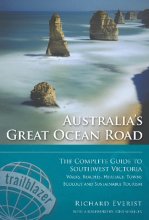
Australia's Great Ocean Road
Excerpt:
Foreword
Foreword | Contents list
FOREWORD BY LONELY PLANET FOUNDER, TONY WHEELER
Loved to death. These days, this scary phrase gets tagged on to more and more travel destinations around the world. It would be a tragedy if it were ever to be attached to the Great Ocean Road.
Even now, people scratch their heads and wonder if or when their favourite holiday destination will morph from quiet surfer's escape or laid-back fishing village into a holiday resort with streets lined with shops, cafes, apartments and hotels.
Towns and regions worry about how they're going to cope with ever increasing flows of people. Some will give up the struggle in the face of population growth and become undistinguished suburbs.
Others will give up the struggle to maintain a real community and become full-time theme towns, not just dependent upon tourism but non-existent without it.
Thirty years ago the words 'sustainable' and 'responsible' weren't part of any travel checklists, but I have always believed in the importance of making an informed connection to the people and places where we holiday.
The more knowledge we have, the more likely we are to have a positive experience, and the more likely it is we'll make a positive impact.
Today, more than ever, I'm utterly convinced of the incredible importance of tourism and travel. Tourism is a major industry – the world's biggest economic activity according to many studies. In fact for many towns, not to mention countries, tourism is more than just a key part of their economies, it's often the overwhelming part.
But tourism is far more than food on tables and money in wallets. In recent years it has been underlined again and again that it's only when we escape our day-to-day working lives, travel, meet people, explore and have time to think, that we begin to understand we're all sharing this world and coming along for the ride, despite the barriers that governments, religions and political movements often seem to build up between us.
So how do we make that ride not just a quick fairground twirl, but something that's going to last for the long run, something we can enjoy and pass on to our children and future generations
This book won't try to tell you 'this is what you must do.' It will give you information about the Great Ocean Road region. And it will alert you to travel and holiday possibilities waiting to be explored.
In some cases the possibilities will come with guidelines on how to tread softly, how to ensure your footprints are faint ones. Or it might be a case of accepting what you're doing is going to have an impact, but at the same time finding a way to balance the negative with a positive.
The most important possibilities, however, are those where sustainable and tourism don't just go together, rather, the first word simply couldn't be there without the second. In many cases – from national parks to whales – it's tourism that is the ultimate guarantor of survival.
National parks may be perceived as nothing more than untapped development opportunities if people don't visit them. Whales may be perceived as nothing more than heavyweight sea cattle if we can't manage to make them championship tourist attractions.
In other cases tourism provides regional communities a more environmentally friendly income than anything else on offer. Income can come from turning forest into wood chips or farms into pine plantations, but it's clear that catering for walkers and tourists can be a sustainable alternative.
Today there's no way of avoiding the importance of travelling and holidaying sustainably and responsibly.
Tony Wheeler, Co-Founder Lonely Planet
Australia's Great Ocean Road
Excerpts:
- Foreword
- Contents list
Latest tweets